
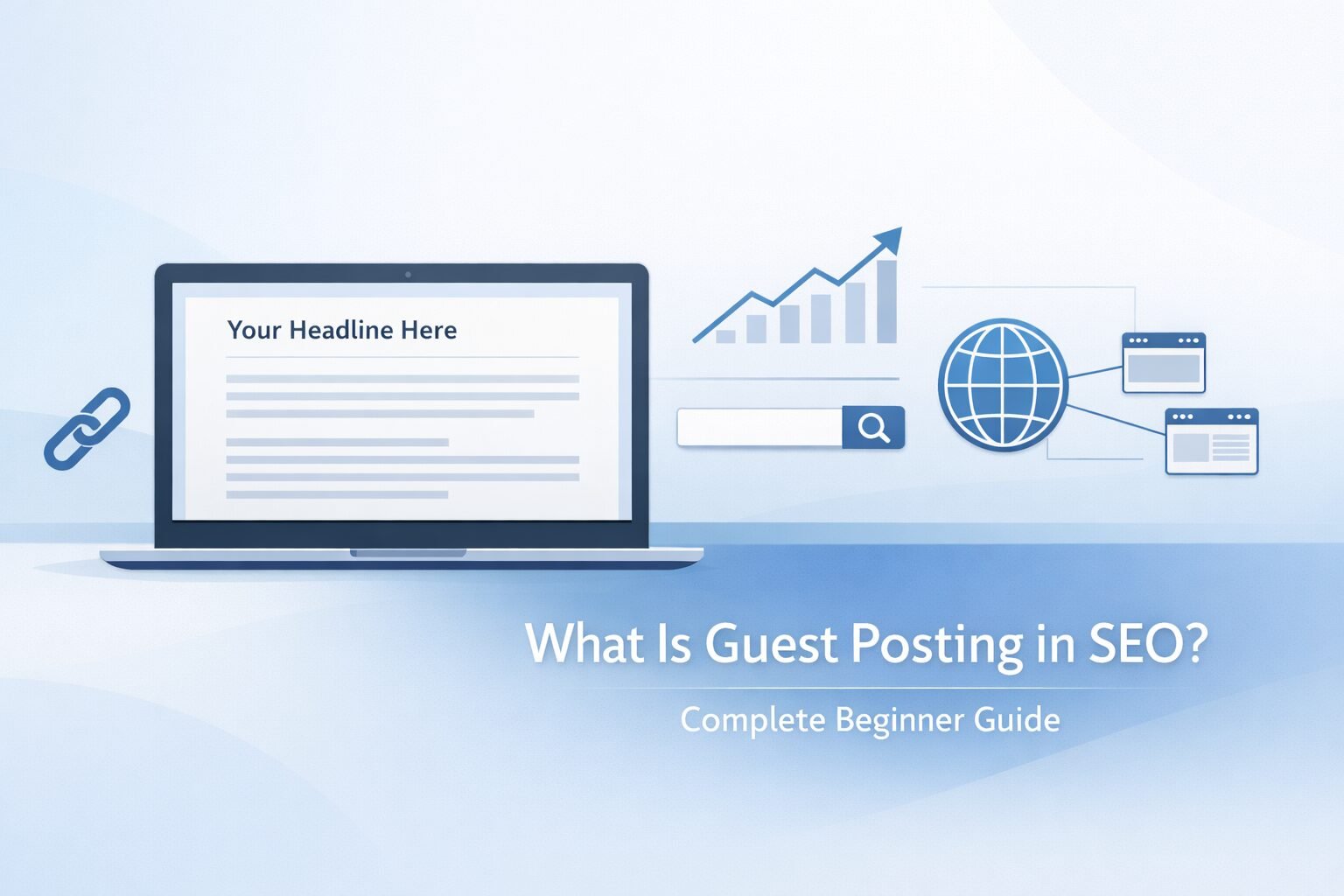
Guest posting in the context of SEO is a strategy where you create content for another website or blog that is not your own. When you do this, you usually include a link back to your own site. This link, called a backlink, helps search engines recognize your website as trustworthy and relevant. By contributing valuable content to other platforms, you are not only sharing your expertise but also improving your website’s presence online.
Guest posting is important for digital marketing because it is a key part of off-page SEO. Off-page SEO focuses on actions you take outside your website to boost your search engine rankings. Through guest posting, you connect with high-authority sites and blogs, which can increase your credibility and visibility. This strategy is about more than just links; it helps you reach new audiences, establish your brand as an expert, and strengthen relationships within your industry.
The benefits of guest posting are significant. First, it drives traffic to your website because readers from the host site can click your links to learn more about your content or services. Second, it builds brand awareness, as more people become familiar with your name and expertise. Third, it creates high-quality backlinks, which are crucial for search engines to evaluate your website’s authority and relevance. When done consistently and thoughtfully, guest posting can improve your SEO performance while growing your audience and online reputation.
What is Guest Posting in SEO? Guest Blogging Examples & Beginners Guide

Guest posting is when you write and publish an article or content on a website or blog that does not belong to you. In simple terms, it means you are sharing your knowledge or expertise on someone else’s platform, often with a link back to your own website. This link is important because it connects your site to the content you publish elsewhere, helping both readers and search engines recognize your work.
The connection between guest posting and search engine optimization (SEO) lies mainly in link building. Each time you include a link to your website on a third-party website, blog, or online publication, you create a backlink. These backlinks are valuable because search engines use them to judge the authority and relevance of your site. When your website is linked from high-quality, trusted sites, search engines see your content as more reliable, which can improve your rankings in search results.
Guest posting is also a key part of off-page SEO, which focuses on actions taken outside your website to boost your online presence. By posting on other blogs and publications, you reach new audiences, build relationships with other content creators, and create opportunities for readers to discover your brand. Overall, guest posting combines content creation, relationship building, and strategic link placement to support both your digital marketing efforts and SEO growth.
Benefits of Guest Posting
Guest posting can significantly increase your website traffic and visibility. When you publish content on a third-party website or blog, you reach an audience that might not yet know about your brand. Each article you contribute acts as a doorway, directing new visitors to your site through carefully placed links. This exposure not only brings more readers but also helps your website become more recognizable in your niche, making it easier for potential customers or clients to find you.
At the same time, guest posting helps you build high-quality backlinks, which are essential for improving your domain authority (DA). Search engines consider backlinks from trusted, high-authority websites as votes of confidence in your content. The more quality links you earn, the stronger your website appears to search engines, which can improve your rankings in search results. This link building is a crucial part of off-page SEO and helps establish your website as a reliable source in your field.
Guest posting also enhances your brand awareness and credibility. By consistently providing valuable, well-written content on reputable sites, you position yourself as an expert in your industry. Readers begin to associate your name or brand with authority and knowledge, which can lead to more opportunities for collaboration, partnerships, and conversions.
Additionally, guest posting allows you to expand your network and build relationships with other bloggers, website owners, and industry professionals. These connections can open doors to future collaborations, co-marketing opportunities, and even long-term partnerships that benefit both your online presence and your business growth. By combining visibility, backlinks, credibility, and networking, guest posting becomes a powerful strategy to strengthen your SEO and overall digital marketing efforts.
How to do Guest Posting
The process of guest posting involves several key steps that you need to follow to get the best results for your SEO and digital marketing efforts. First, content creation is essential. You need to produce high-quality, informative, and engaging articles that provide real value to readers. Your content should be relevant to the audience of the third-party website or blog where you plan to publish it. Focusing on helpful, well-structured content increases the chances that your post will be accepted and shared widely.
Next comes outreach. This is the step where you identify websites, blogs, or online publications that are relevant to your industry and have high authority. You reach out to these sites with a professional pitch, explaining what your content offers and why it would benefit their audience. Targeting high-authority sites is important because backlinks from these websites carry more weight in search engine rankings and help build your credibility online.
Once your content is approved, submission is the next step. This involves sending your article according to the host site’s guidelines, which may include formatting rules, word count, images, and links. Following these submission guidelines carefully ensures your content is published without delays and looks professional.
Promotion is the final step. Even after your guest post is published, you should share it across your own social media channels, email newsletters, and other platforms to maximize visibility. Encouraging engagement through comments and shares not only brings more traffic to your post but also strengthens your relationship with the host site.
To make the most of guest posting for SEO, it is important to optimize key elements of your article. Your author bio should be clear, concise, and include a link to your website, highlighting your expertise. Anchor text, the clickable words used for your backlink, should be natural and relevant to the linked page. Finally, the overall content should include your target keywords in a way that feels natural, helping search engines understand the relevance of your post while keeping it readable for human readers. By focusing on quality, relevance, and proper optimization, you ensure that your guest posting efforts contribute effectively to your off-page SEO and overall digital marketing strategy.
Guest Posting Strategy for SEO
Finding the right websites and blogs for guest posting is one of the most important steps in your strategy. You want to target sites that are relevant to your niche, have a strong audience, and hold high authority in your industry. Publishing on these platforms ensures that your content reaches the right readers while earning valuable backlinks that improve your website’s SEO. Take time to analyze potential sites by checking their traffic, engagement, and domain authority, so you focus your efforts where they will have the most impact.
Once you have identified the right platforms, researching topics that fit your niche becomes the next step. Your content should address issues, questions, or interests that matter to the host site’s audience. By aligning your topics with both your expertise and the audience’s needs, you increase the likelihood that your guest post will be accepted and shared. Relevant and valuable content also helps you establish authority and credibility within your field.
Following proper guidelines for content creation and submission is crucial. Each website or blog may have its own rules regarding word count, formatting, style, images, and links. Adhering to these guidelines shows professionalism and increases the chance that your post will be published without delays. High-quality content that meets the host site’s standards also reflects positively on your brand and enhances your relationship with other content creators.
Finally, tracking results and measuring the impact of your guest posting is essential to understand the effectiveness of your efforts. Monitor metrics like website traffic, referral traffic from your guest posts, backlinks gained, and changes in search engine rankings. By analyzing these results, you can see which strategies work best, optimize future guest posts, and ensure that your time and effort are generating real value for your SEO and digital marketing goals. Tracking also allows you to refine your approach, focus on high-performing sites, and continuously improve your off-page SEO strategy.
Common Mistakes to Avoid
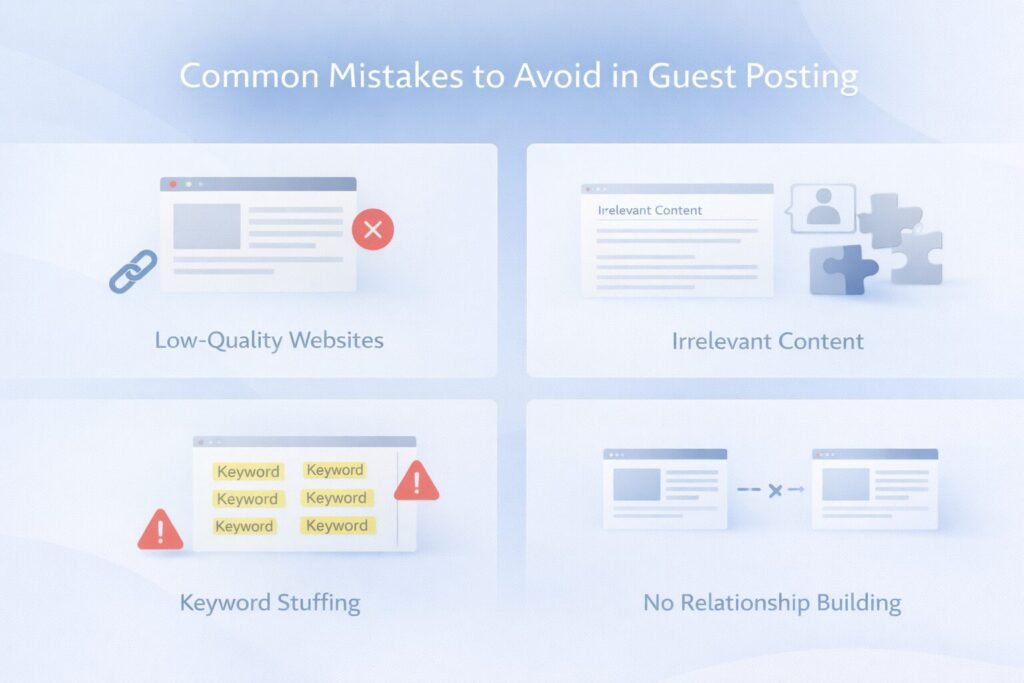
When you are guest posting, it is very important to avoid posting on low-quality or spammy websites. These sites may seem like easy options, but links from them can actually harm your SEO instead of helping it. Search engines can recognize these low-authority or irrelevant sites and may reduce your website’s ranking because of them. Always prioritize high-authority blogs and trusted publications that are respected in your niche, so your backlinks carry real value and improve your credibility online.
Another common mistake is ignoring content relevance or audience fit. Even if a site has high traffic, publishing content that does not match the interests or needs of its audience will not give you meaningful results. Your guest posts should align with both your expertise and the host site’s content so that readers find your article useful. Relevant content increases engagement, drives more traffic to your website, and strengthens your authority in your field.
Overusing keywords in anchor text is also a mistake that can hurt your SEO. While it is important to include links to your website, stuffing them with exact-match keywords looks unnatural to search engines and can trigger penalties. Use anchor text naturally, focusing on phrases that make sense within the content and provide real value to the reader.
Finally, neglecting follow-up or relationship building can limit the benefits of your guest posting efforts. After your content is published, take time to engage with the host website, respond to comments, and maintain communication with the editor or owner. Building strong relationships can lead to more guest posting opportunities in the future, collaborations, and a stronger presence in your industry. By avoiding these mistakes, you ensure that your guest posting strategy supports your SEO goals, enhances your brand, and creates long-term value.
FAQs
What is the difference between guest posting and article submission?
Guest posting and article submission are two strategies that may seem similar, but they serve different purposes and work in different ways. Guest posting involves creating high-quality, original content specifically for another website or blog within your industry. The goal is to provide value to the host site’s audience while including a backlink to your own website. Article submission, on the other hand, often involves submitting pre-written or syndicated content to multiple directories or platforms without targeting a specific audience. Unlike guest posting, article submission usually focuses more on quantity than quality and may not build relationships or credibility.
How often should you do guest posting for SEO?
The frequency of guest posting for SEO depends on your goals, resources, and the quality of the content you can produce. Publishing consistently is important, but quality should always come first. For most websites, posting one or two high-quality guest articles per month is a good starting point. This allows you to maintain relevance, build backlinks steadily, and engage with new audiences without overextending your resources.
Can guest posting hurt my SEO if done wrong?
Guest posting can hurt your SEO if done incorrectly. Publishing on low-quality or spammy websites, overusing keywords in anchor text, or posting irrelevant content can reduce your website’s credibility in the eyes of search engines. Poorly executed guest posting can even lead to penalties that negatively affect your rankings. To avoid this, always focus on high-authority sites, maintain content relevance, and follow proper SEO practices in every post.
How long does it take to see results from guest posting?
The results from guest posting are not instant, but they can be significant over time. You may start to see increased traffic, more engagement, and improved search rankings within a few weeks to a few months, depending on the quality of the sites you target and the relevance of your content. Building domain authority and strong backlinks is a gradual process, so patience and consistency are key. By focusing on strategic, high-quality guest posting, you create lasting SEO benefits that continue to grow and support your digital marketing goals over the long term.
Conclusion
Guest posting is one of the most effective strategies you can use to grow your SEO and strengthen your online presence. By publishing high-quality content on other websites, you not only earn valuable backlinks but also increase your visibility, attract more traffic, and establish your brand as an authority in your niche. Every guest post you create contributes to off-page SEO, helping search engines recognize your site as trustworthy and relevant. This is why consistent, well-planned guest posting is a key part of any long-term digital marketing strategy.
To get the most benefit, start building relationships with reputable bloggers, website owners, and industry influencers. Engage with their content, understand their audience, and offer valuable articles that fit their platform. By focusing on quality, relevance, and mutual benefit, you strengthen your network while positioning yourself as a credible and knowledgeable contributor in your field.
Now is the time to take action. Begin reaching out to high-authority sites, create insightful and engaging content, and publish your guest posts strategically. By doing this, you can boost your SEO, attract new audiences, and grow your brand’s recognition online. The sooner you start, the sooner you can see the long-term benefits of guest posting as a powerful tool for digital marketing and off-page SEO growth.